Sample pages of the actual document, watermarked. The download is clean.
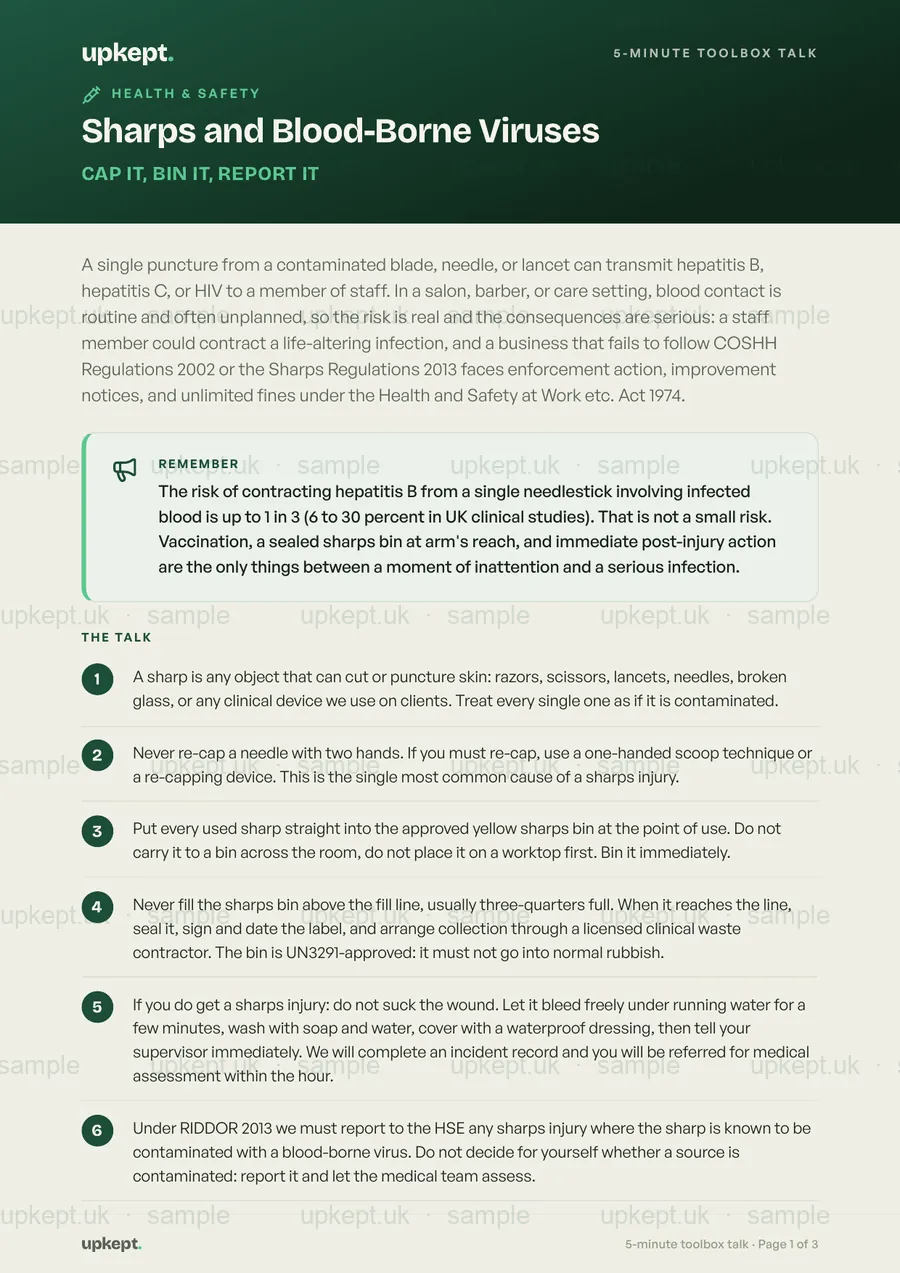
Sharps and Blood-Borne Viruses
One puncture from a contaminated blade, needle or lancet can transmit hepatitis B, hepatitis C or HIV. In a salon, barber or care setting blood contact is routine and often unplanned. COSHH 2002 and the Sharps Regulations 2013 set the controls, and the HSE enforces them.
30-day money-back guarantee.
- A script to read out, no prep needed
- Questions to check the team understood
- What the law says, in clear terms
- A printed sign-off sheet, your training record
The talk
What you say, in order.
Read it out as it is, or make it your own. Either way the team hears the same thing, every time.
- 1A sharp is any object that can cut or puncture skin: razors, scissors, lancets, needles, broken glass, or any clinical device we use on clients. Treat every single one as if it is contaminated.
- 2Never re-cap a needle with two hands. If you must re-cap, use a one-handed scoop technique or a re-capping device. This is the single most common cause of a sharps injury.
- 3Put every used sharp straight into the approved yellow sharps bin at the point of use. Do not carry it to a bin across the room, do not place it on a worktop first. Bin it immediately.
- 4Never fill the sharps bin above the fill line, usually three-quarters full. When it reaches the line, seal it, sign and date the label, and arrange collection through a licensed clinical waste contractor. The bin is UN3291-approved: it must not go into normal rubbish.
- 5If you do get a sharps injury: do not suck the wound. Let it bleed freely under running water for a few minutes, wash with soap and water, cover with a waterproof dressing, then tell your supervisor immediately. We will complete an incident record and you will be referred for medical assessment within the hour.
- 6Under RIDDOR 2013 we must report to the HSE any sharps injury where the sharp is known to be contaminated with a blood-borne virus. Do not decide for yourself whether a source is contaminated: report it and let the medical team assess.
- 7Everyone in this team who works with sharps should have been offered the hepatitis B vaccination course. If you have not been offered it, speak to me today. This is a legal requirement under COSHH Regulations 2002 and we pay for it.
- 8Blood-borne viruses including hepatitis B, hepatitis C, and HIV cannot be seen on a sharp. Standard Precautions mean we treat every client contact as a potential exposure risk, every time, without exception.
Ask the team
- ?If you cut yourself on a blade right now, walk me through exactly what you would do, step by step.
- ?Where is the sharps bin in this room, and what do you do when it reaches the fill line?
- ?Who in this team has not yet completed their hepatitis B vaccination course, and what should you do about that after this talk?
What the law says
Assess the risk, control it, bin it safely
COSHH Regulations 2002 require employers to assess the risk of exposure to biological agents including blood-borne viruses and put adequate controls in place, including offering hepatitis B vaccination where there is a real risk of exposure. The Health and Safety (Sharp Instruments in Healthcare) Regulations 2013 (SI 2013/645) require that sharps are disposed of immediately at the point of use into a secure, clearly marked container, and that staff receive training on safe sharps handling and what to do after an injury. Breaches of either instrument can result in enforcement action by the HSE and prosecution under the Health and Safety at Work etc. Act 1974.
Source: Control of Substances Hazardous to Health Regulations 2002 (SI 2002/2677); Health and Safety (Sharp Instruments in Healthcare) Regulations 2013 (SI 2013/645); HSE guidance HSIS7
Before you buy
Questions people ask first
What is the "Sharps and Blood-Borne Viruses" toolbox talk?
One puncture from a contaminated blade, needle or lancet can transmit hepatitis B, hepatitis C or HIV. In a salon, barber or care setting blood contact is routine and often unplanned. COSHH 2002 and the Sharps Regulations 2013 set the controls, and the HSE enforces them.
What does the law say?
Assess the risk, control it, bin it safely. COSHH Regulations 2002 require employers to assess the risk of exposure to biological agents including blood-borne viruses and put adequate controls in place, including offering hepatitis B vaccination where there is a real risk of exposure. The Health and Safety (Sharp Instruments in Healthcare) Regulations 2013 (SI 2013/645) require that sharps are disposed of immediately at the point of use into a secure, clearly marked container, and that staff receive training on safe sharps handling and what to do after an injury. Breaches of either instrument can result in enforcement action by the HSE and prosecution under the Health and Safety at Work etc. Act 1974.
How do I run it, and does it count as training?
Read it out in about five minutes, ask the team the questions, and everyone signs the attendance sheet. That sign-off is your evidence of training under the Health and Safety at Work etc. Act 1974, section 2. Reviewed for October 2026.